
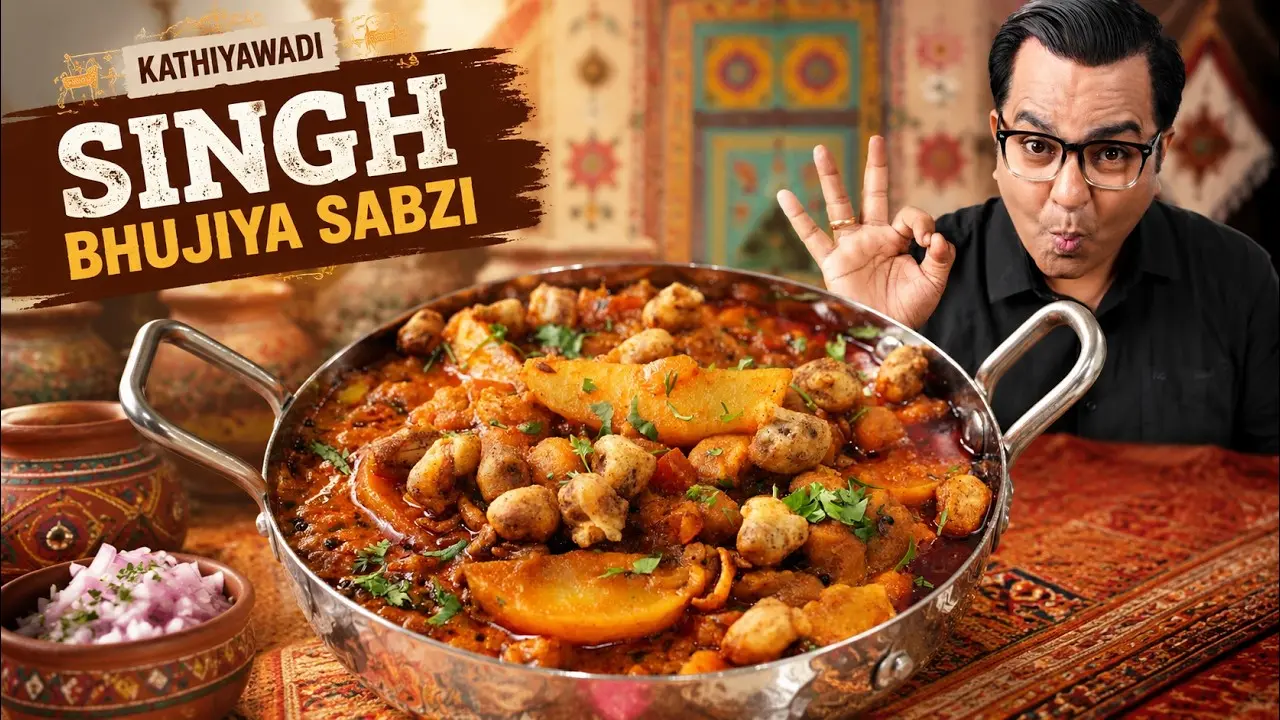
Bhujia Shing Ki Sabzi – A Chatpata Kathiyawadi Dish You Cannot Miss

45 Mins

5-6 People

05 Mins
Bhujia Shing Ki Sabzi – A Chatpata Kathiyawadi Dish You Cannot Miss
Did you know that peanuts, which we usually just munch on as a snack, can actually make one of the most delicious sabzis you have ever tasted? I know it sounds surprising, but once you try this Bhujia Shing Ki Sabzi, you will never look at peanuts the same way again. This is a proper Kathiyawadi dish — chatpata, masaledar, and full of desi flavour.
I love collecting recipes from Kathiyawar, and this one is very close to my heart. We have a restaurant in Rajkot, and the food from that region is something I genuinely enjoy. That is exactly why I keep hunting for gems like this Bhujia Shing Ki Sabzi to bring to your kitchen. It is simple to make, uses very basic ingredients, and the taste — I guarantee — will make you eat at least one extra roti.
Ingredients of Bhujia Shing Ki Sabzi
Portions/Servings: 5–6 pax
Preparation Time: 05 mins
Cooking Time: 45 mins
For Bhujia Shing Ki Sabzi:
- Oil – 2 tbsp
- Potato wedges – 2 pcs
- Mustard seeds – ½ tsp
- Jeera – 1 tsp
- Hing – ½ tsp
- Garlic, chopped – 1 tbsp
- Onion, chopped – 2 pcs
- Salt – 1 tsp
- Turmeric powder – ½ tsp
- Coriander powder – 1 tsp
- Red chilli powder – 1 tsp
- Kitchen king masala – 1 tsp
- A splash of water
- Curd – ½ cup
- Tomatoes, chopped – 1 pc
- Coriander, chopped – 1 tbsp
- Water – as required
- Fried potatoes
- Bhujiya shing / peanuts – 1 cup
- Coriander, chopped – ½ tbsp
For Phulka:
- Wheat flour – 1 cup
- Salt – 1 tsp
- Water – as required
- Ghee – 1 tbsp
Instructions of Bhujia Shing Ki Sabzi
Step 1: Half-Cook the Potatoes
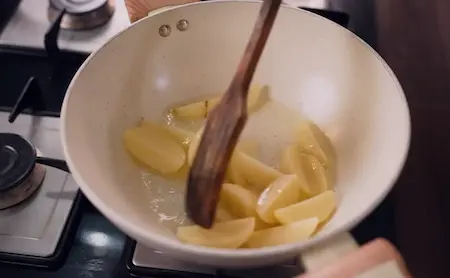
Peel the potatoes and cut them into medium-sized wedges. Heat oil in a kadhai and shallow-fry the potato wedges until they are half-cooked and lightly golden from the outside. This step helps the potatoes hold their shape while absorbing the gravy later. Remove them from the pan and keep aside on a plate.
Step 2: Prepare the Tadka
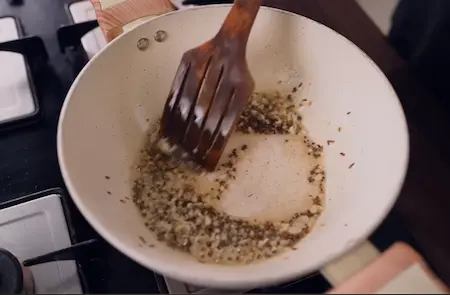
In the same kadhai with the remaining oil, add mustard seeds and jeera. Let them crackle properly — that fhatfhat sound means they are releasing their full flavour. Add hing and sauté briefly. Then add chopped garlic and cook until aromatic and lightly golden.
Step 3: Cook the Onion Base
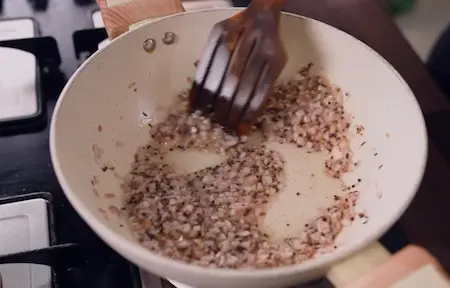
Add chopped onions to the pan and sauté on medium flame until soft and lightly golden brown. Stir occasionally so the onions cook evenly and develop a rich flavour base for the sabzi.
Step 4: Add the Masalas
Add turmeric powder and coriander powder first and sauté for a few seconds. Then add red chilli powder and kitchen king masala. Mix everything well and add a splash of water to prevent the spices from burning. Cook the masala for 1–2 minutes until aromatic and slightly roasted. Make sure the dry masalas are cooked properly — if they stay raw, they can cause acidity. So give them a good 1 to 2 minutes on medium heat.
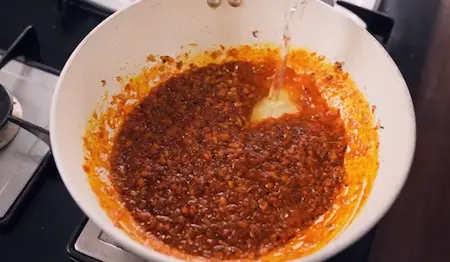
Step 5: Add Curd and Tomatoes
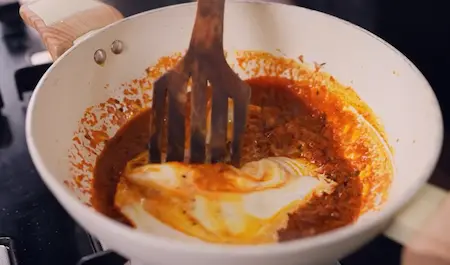
Lower the flame and add whisked curd while stirring continuously to avoid splitting. Cook until the rawness of the curd disappears and oil starts floating on top — that is your sign that the gravy is almost ready. Now add chopped tomatoes and cook until they become soft and mushy. Add a little chopped coriander for freshness. If the tomatoes are too sour, you can add a small pinch of jaggery or sugar to balance it out.
Step 6: Finish the Sabzi
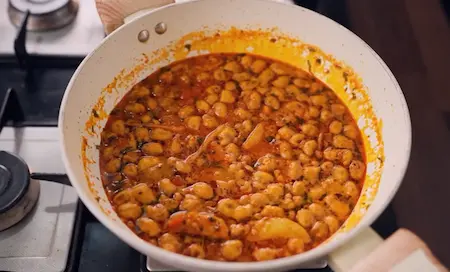
Add water to adjust the consistency of the gravy — keep it slightly thin because the potatoes and bhujia will soak up all that masala. Add the half-cooked potatoes and let them simmer in the masala so they absorb all the flavours properly. Add garam masala and salt. Once the potatoes are fully cooked and the gravy thickens slightly, add bhujiya shing (peanut bhujia). Mix gently so the bhujia absorbs the masala while retaining a slight crunch. Finish with fresh coriander leaves.
Instructions for Phulka
Step 1: Prepare the Dough
Mix wheat flour and salt in a bowl. Add water gradually and knead into a soft dough. Cover and rest for 15–20 minutes.
Step 2: Roll and Cook the Phulka
Divide the dough into small portions and roll them into thin circular discs. Cook on a hot tawa until bubbles appear. Flip and cook lightly on both sides, then finish directly on open flame until the phulka puffs beautifully. Apply ghee and keep covered.

Step 3: Serve Hot
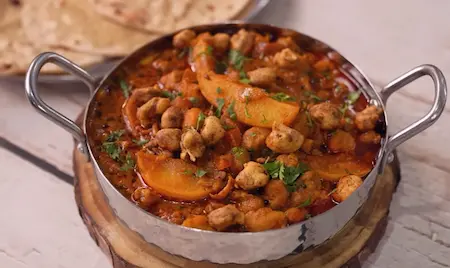
Serve hot phulkas with flavourful Bhujia Shing Ki Sabzi for a comforting homestyle meal.
About Bhujia Shing Ki Sabzi
This Bhujia Shing Ki Sabzi is honestly one of the most fun recipes I have made in a long time. The whole concept is simple — you take that crunchy peanut bhujia that you usually eat as a snack, and you cook it into a proper chatpata sabzi with aloo, dahi, and tomatoes. The result is something really special.
What I love most about this recipe is the gravy. It is made Kathiyawadi style, which means it is tangy, spicy, and full of flavour. I used both curd and tomatoes together because that is what gives it that extra chatpata character. The dahi adds a creamy tang while the tomatoes give it body and depth. Together they make a gravy that just sticks to every piece of potato and peanut.
The potatoes play a very important role here. I fry them first — just until golden and half-cooked — before adding them to the gravy. This way they hold their shape and slowly absorb all the masala as they finish cooking inside the gravy. You get soft potatoes from inside but a slightly textured outside. It makes every bite really satisfying.
And then comes the star — the bhujiya shing. You add it right at the end. It soaks up the masala beautifully while still keeping a little crunch. That crunch is what makes this sabzi unlike any other. I have made peanut sabzi before and you all loved it, but this Bhujia Shing Ki Sabzi is on a whole different level. Trust me on this one.
The best part? It takes very basic ingredients and barely any prep. If you can make a simple tarka and a basic onion-tomato gravy, you can absolutely nail this dish. Serve it with fresh rotli or phulka and you have a complete, wholesome desi meal ready in no time.
Cooking Tips for Bhujia Shing Ki Sabzi
Always fry the potatoes first: Do not skip the step of shallow frying the potato wedges before adding them to the gravy. This gives them a slightly golden crust that helps them hold shape and absorb the masala better as they finish cooking inside the gravy.
Cook your dry masalas properly: I always say this — cook your dry spices for at least 1 to 2 minutes on medium heat. Raw spices are the number one reason people face acidity after eating home-cooked food. A splash of water can help prevent them from burning while still ensuring they cook through.
Wait for the oil to float: After you add the curd, keep cooking on medium heat until you can see the oil separating and floating to the top. That is your sign that the dahi is fully cooked and the gravy base is ready. Do not rush this step.
Keep the gravy slightly thin: Before adding the potatoes and bhujia, make sure to loosen the gravy a little with water. Both the potatoes and the peanut bhujia will absorb a lot of the masala as they cook, so you need that extra liquid in there.
Add bhujia at the very end: The bhujia shing should always go in last, just before serving. If you add it too early, it will become completely soft and lose its texture. You want it to just absorb the masala while holding on to a slight crunch — that bite is what makes this sabzi so special.
Balance the sourness: If your tomatoes are very sour, or the gravy tastes too tangy, just add a small piece of jaggery or a pinch of sugar. It instantly balances everything out without making the dish sweet.
Pairing Guide for Bhujia Shing Ki Sabzi
Rotli or Phulka: The most natural pairing for this sabzi is fresh, soft rotli — just like they serve in Kathiyawar. The thin, slightly charred phulka soaks up the chatpata gravy perfectly. This combination is simple, complete, and absolutely satisfying.
Bajra Rotla: If you want to keep it truly Kathiyawadi, pair this sabzi with thick bajra rotla. The earthy, nutty flavour of bajra works beautifully with the tangy and spicy masala of the Bhujia Shing Ki Sabzi.
Steamed Rice: While rotli is the classic partner, this sabzi also goes very well with plain steamed rice. The gravy works like a dal on rice and makes for a really comforting meal.
Chaas (Buttermilk): Since this is a chatpata and slightly spicy dish, a tall glass of chilled chaas on the side is a perfect cooling companion. It cleanses the palate and balances the heat of the red chilli and kitchen king masala.
Raw Onion and Lemon: A classic desi side — just a few rings of raw onion with a squeeze of lemon and a pinch of salt. It cuts through the richness of the dahi gravy and adds freshness to every bite.
Pickle (Achaar): A small serving of homemade mango pickle or mixed achaar goes wonderfully with this sabzi and rotli combo. The sharp, oily kick of the pickle takes the whole meal to another level.
Frequently Asked Questions About Bhujia Shing Ki Sabzi
1. What is Bhujia Shing Ki Sabzi?
Bhujia Shing Ki Sabzi is a traditional Kathiyawadi-style Indian sabzi made with peanut bhujia cooked in a spicy and tangy onion-tomato-curd gravy along with fried potato wedges. It is chatpata, crunchy, and full of desi flavour. What makes it unique is that the peanut bhujia — usually eaten as a snack — becomes the hero ingredient of this sabzi.
2. Can I use regular peanuts instead of peanut bhujia in this recipe?
The peanut bhujia is what gives this Bhujia Shing Ki Sabzi its special texture and flavour. Regular raw or roasted peanuts will not give the same result because the bhujia is already seasoned and has a crispy, coated texture. If you cannot find peanut bhujia, you can use lightly roasted salted peanuts but know that the taste and crunch will be a little different.
3. Why do we add curd and tomatoes both in this recipe?
In Kathiyawadi cooking, the food is meant to be chatpata — tangy and bold. Using both curd and tomatoes together gives this Bhujia Shing Ki Sabzi a layered sourness and a rich, creamy-yet-tangy gravy. The dahi adds body and tang while the tomatoes bring freshness and colour. Together they create a masala base that is far more flavourful than using just one of them.
4. When should I add the bhujia to the sabzi?
Always add the bhujia shing right at the end, just before serving. If you add it too early, it will absorb too much water and become soft and mushy. The idea is to let it just coat with the masala while keeping a slight crunch. That crunch is what makes Bhujia Shing Ki Sabzi so enjoyable and different from any regular sabzi.
5. Why is it important to fry the potatoes before adding them to the gravy?
Frying the potato wedges first — until they are golden and half cooked — gives them a slight crust on the outside. This stops them from breaking apart when they simmer in the gravy. It also helps the potatoes slowly absorb all the masala flavour from inside without turning into mash. This step is key to the final texture of the Bhujia Shing Ki Sabzi.
6. What does it mean when oil floats on top of the curd while cooking?
When you see oil separating and floating to the top after cooking the curd in the masala, it means the dahi is fully cooked and the gravy base is ready. This is an important visual cue in the Bhujia Shing Ki Sabzi recipe. If you add tomatoes before this happens, the gravy can taste raw and sour. Always wait for the oil to surface before moving to the next step.
7. My Bhujia Shing Ki Sabzi turned out very sour. What should I do?
This usually happens when the tomatoes are very sour or when the curd has a strong tang. The fix is simple — just add a small piece of jaggery or half a teaspoon of sugar to the gravy while it is cooking. It will instantly balance out the sourness without making the dish sweet. You can also taste and adjust as you go.
8. Can I make Bhujia Shing Ki Sabzi without potatoes?
You can, but the potatoes add a nice bulk and absorb the masala beautifully, which balances the texture of the crunchy bhujia. If you skip the potatoes, the sabzi will feel lighter and the bhujia will be the only main ingredient. It will still taste good but the experience will be different. I personally recommend keeping the aloo in — it makes the Bhujia Shing Ki Sabzi more wholesome and filling.
9. What is kitchen king masala and can I substitute it?
Kitchen king masala is a readymade spice blend that adds a rich, layered flavour to the dish. It is widely available in Indian grocery stores. If you do not have it, you can use garam masala or a combination of coriander powder, cumin powder, and a small pinch of amchur as a substitute. The Bhujia Shing Ki Sabzi will still taste great, just with a slightly different flavour profile.
10. What is the best bread to serve with Bhujia Shing Ki Sabzi?
The most traditional pairing is rotli or phulka — thin, soft Indian flatbreads that soak up the chatpata gravy really well. In Kathiyawar, it is often served with bajra rotla as well. You can also serve it with plain rice if you prefer. But honestly, fresh phulkas with a drizzle of ghee alongside the Bhujia Shing Ki Sabzi is the combination I enjoy the most. It is simple, desi, and absolutely perfect.