

Meethe Chawal Recipe

50 Mins

5-6 People

1 Hour
Introduction: Meethe Chawal Recipe
The first time I prepared this Meethe Chawal Recipe, it was during the spring season, around Basant Panchami. This is the time when winter slowly fades and summer begins to arrive. On my YouTube channel, I often talk about how food connects deeply with seasons, and Meethe Chawal Recipe is one dish that truly celebrates this transition.
What I love most about the Meethe Chawal Recipe is how it is known by different names across India. In some regions it is called zarda, in others simply meethe chawal. The name may change, but the soul of the dish remains the same—beautifully colored rice, gentle sweetness, and a festive feeling that fills the kitchen during celebrations.
Ingredients of Meethe Chawal Recipe
Portion / Servings: 5–6 pax
Preparation Time: 1 hour
Cooking Time: 50 minutes
- Basmati rice – 2 cups
For partially cooking rice:
- Boiling water – as required
- Salt – 1 tsp
- Food colour – few drops
- Turmeric powder – ½ tsp
For roasting nuts:
- Ghee – 2 tbsp
- Cashew nuts – 10–15 pcs
- Almonds – 10–15 pcs
- Pista – 10–15 pcs
- Dry coconut slices – 8–10 pcs
- Raisins – 1 tbsp
For cooking meethe chawal:
- Ghee – 1 tbsp
- Green cardamom – 6–8 pcs
- Mace – 1 pc
- Cinnamon – 1 inch
- Bay leaf – 3 pcs
- Sugar – 1 cup
- Water – as required
- Tutti frutti – 1 tbsp
- Saffron milk – 2 tbsp
- Khoya – 1 tbsp
- Kewra water – 1 tsp
Instructions of Meethe Chawal Recipe
Step 1: Prepare and Cook the Rice
Start by washing basmati rice thoroughly and soak it in water for about an hour. This ensures the grains remain long and fluffy after cooking. Meanwhile, bring water to a boil in a large pot. Add a pinch of salt, a few drops of food color, and a hint of turmeric powder to give the rice a delicate golden hue. Drain the soaked rice and add it carefully to the boiling water. Cook the rice partially until it is about eighty-five percent done, leaving it slightly firm so that it does not break during mixing. Once cooked, drain the rice and keep it aside.

Step 2: Roast the Nuts and Dry Fruits
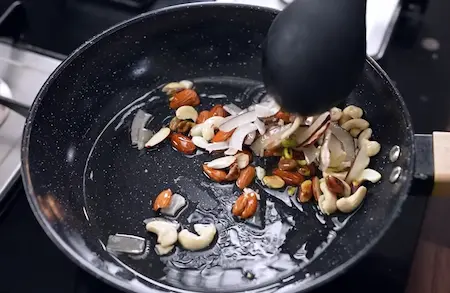
In a pan, heat ghee and roast the cashew nuts, almonds, pistachios, and dry coconut slices gently until they turn light golden brown. Add raisins towards the end, letting them plump up slightly without burning. Once done, remove the nuts and fruits from the pan and set them aside. This step enhances their aroma and provides a crunchy, nutty texture to the sweet rice.
Step 3: Prepare the Flavored Sugar Syrup
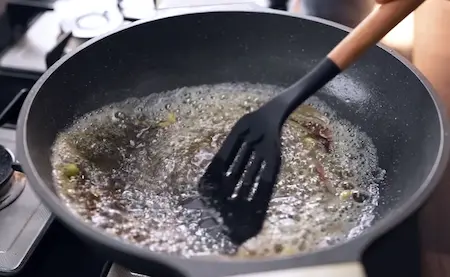
In the same pan, heat a little ghee and add whole spices such as green cardamom, mace, cinnamon, and bay leaves. Sauté them briefly just enough to release their fragrant oils. Add sugar along with a small amount of water and stir to make a thick sugar syrup. The syrup should have a balanced sweetness that will coat the rice evenly and infuse it with aromatic flavor.
Step 4: Combine Rice with Syrup
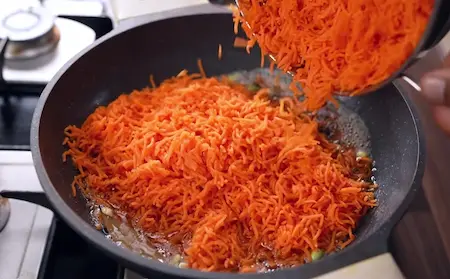
Add the partially cooked and drained rice into the sugar syrup gently. Fold it carefully to ensure each grain is coated without breaking. This step binds the flavors together while keeping the rice fluffy and separate.
Step 5: Add Toppings and Flavorings
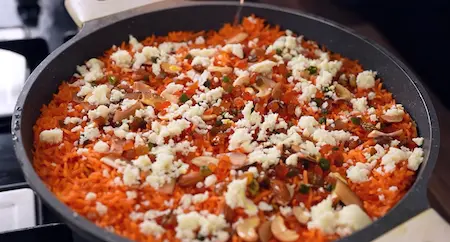
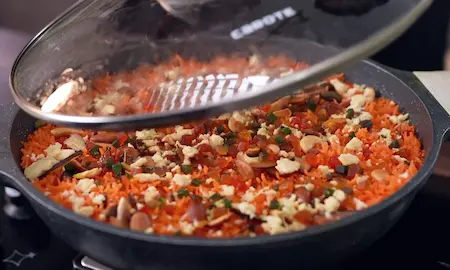
Once the rice is mixed with the syrup, top it with roasted nuts and dry fruits, a spoonful of tutti frutti, a drizzle of saffron-infused milk, some crumbled khoya, and a few drops of kewra water. These ingredients add layers of flavor, richness, and color, giving the dish its traditional festive charm.
Step 6: Steam the Rice
Cover the pan with a tight-fitting lid and let the rice steam on low heat. This allows the flavors to meld, the rice to fully cook, and the saffron, khoya, and kewra to infuse the grains evenly. Once done, gently fluff the rice with a fork to mix in the toppings.
Step 7: Serve
Serve Meethe Chawal warm or at room temperature. The dish should have soft, aromatic grains, a rich, sweet flavor, and a delicate crunch from the roasted nuts and fruits. Every bite offers a festive balance of sweetness, fragrance, and texture, perfect for celebrations or special occasions.

About the Meethe Chawal Recipe
This Meethe Chawal Recipe is special because the cooking method is different from normal sweet rice. Here, the rice is first cooked only up to seventy percent. I learned from the transcript that this step is very important. When the rice is not fully cooked, it opens up slightly and is ready to absorb flavors later.
In this Meethe Chawal Recipe, color plays a big role. Some people use food color, some use turmeric, and some prefer saffron. In this method, a mix of red food color and a little turmeric is used to give the rice a beautiful orange shade. This makes the Meethe Chawal Recipe look festive and joyful.
The sweetness in this Meethe Chawal Recipe comes from a light sugar syrup. The syrup is not thick, because thick syrup will not go inside the rice properly. The half-cooked rice is added to this light syrup so it can soak the sweetness and flavors slowly while cooking on dum.
Dry fruits like cashew, almond, pistachio, raisins, and dry coconut are lightly fried in ghee and added later. Along with this, saffron soaked in milk, a little khoya, and optional kewra water give this Meethe Chawal Recipe a rich and royal touch. The final dum cooking fills the whole house with aroma, just like a biryani-style preparation.
Cooking Tips for Meethe Chawal Recipe
- Always use good quality basmati rice for the Meethe Chawal Recipe. Older rice works better and gives longer grains.
- Soak the rice for at least one hour. This helps the rice grain swell and cook evenly.
- Cook the rice only till seventy percent. When pressed, it should still have a slight bite.
- Do not throw away the rice boiling water immediately. It may be useful later if needed.
- Fry dry fruits only till light golden brown. They continue to cook even after removing from ghee.
- Keep the sugar syrup light. Thick syrup will not allow the Meethe Chawal Recipe to absorb sweetness properly.
- Always cook the Meethe Chawal Recipe on very low heat during dum to avoid burning.
- Using a tawa under the pot helps in even heat distribution while cooking on dum.
Pairing Guide for Meethe Chawal Recipe
The Meethe Chawal Recipe is usually enjoyed on its own during festivals like Basant Panchami. It works beautifully as a main sweet dish in a festive meal.
This Meethe Chawal Recipe pairs well with simple savory dishes so the sweetness stands out. Light dals, plain vegetables, or even a simple pulao meal balance it nicely.
For drinks, warm milk or lightly flavored saffron milk goes very well with the Meethe Chawal Recipe. The gentle aroma of saffron and kewra complements the sweetness.
Frequently Asked Questions about Meethe Chawal Recipe
What is Meethe Chawal Recipe traditionally made for?
The Meethe Chawal Recipe is traditionally made during Basant Panchami and spring season celebrations.
Why is rice cooked only seventy percent in Meethe Chawal Recipe?
In the Meethe Chawal Recipe, seventy percent cooked rice absorbs sugar syrup better and becomes soft without turning mushy.
Can I make Meethe Chawal Recipe without food color?
Yes, the Meethe Chawal Recipe can be made using turmeric or saffron instead of food color.
Why should the sugar syrup be light in Meethe Chawal Recipe?
A light syrup allows the Meethe Chawal Recipe rice to soak sweetness properly during dum cooking.
Which rice is best for Meethe Chawal Recipe?
Old basmati rice is best for the Meethe Chawal Recipe because it gives long and fluffy grains.
Is kewra water necessary in Meethe Chawal Recipe?
Kewra water is optional in the Meethe Chawal Recipe, but it adds a royal aroma if used.
Why are dry fruits fried separately for Meethe Chawal Recipe?
Dry fruits are fried separately to control their color and texture in the Meethe Chawal Recipe.
How long should Meethe Chawal Recipe be cooked on dum?
The Meethe Chawal Recipe should be cooked on dum for about ten to twelve minutes on low heat.
Can khoya be skipped in Meethe Chawal Recipe?
Khoya can be skipped, but it adds richness and depth to the Meethe Chawal Recipe.
How should Meethe Chawal Recipe be served?
The Meethe Chawal Recipe is best served hot, garnished with nuts, tutti frutti, khoya, and silver leaf for a festive look.