
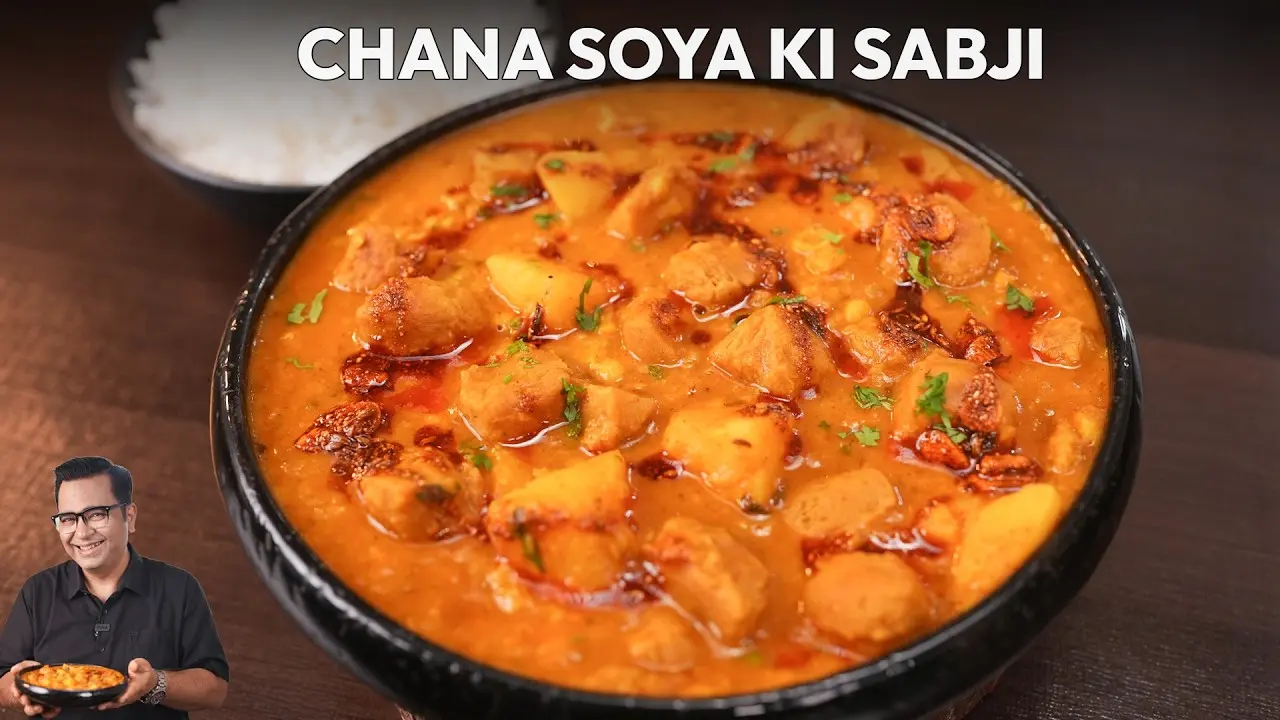
Chana Soya Ki Sabji | Desi Protein Curry Masaledar & Healthy

50 Mins

5-6 People
30 Mins
A Desi Protein Curry That Will Improve Your Dal Recipes
You know, in India, dal is cooked twice a day in almost every home — but after a while, you start craving something different. That is exactly why I came up with this Chana Soya Ki Sabji. The combination of chana dal and soya chunks is something you might not have tried before, but trust me, once you make it, you will keep coming back to it. It has protein, it has carbs, and most importantly, it has taste — what more can you ask for from one pot?
What I love most about this Chana Soya Ki Sabji is how each ingredient brings something unique to the dish. The chana dal is soft and earthy, the soya chunks become spongy and soak up all the masala, and the aloo adds that comforting bite. I literally sat there licking my fingers when I tasted it — and if you try it once, you will understand exactly why.
Ingredients of Chana Soya Ki Sabji
Servings 5–6 Pax
Preparation Time 30 Minutes
Cooking Time 50 Minutes
For Cooking Dal
| Ingredient | Quantity |
|---|---|
| Chana dal, soaked | 2 cups |
| Turmeric powder | ½ tsp |
| Black cardamom | 1 pc |
| Salt | 1 tsp |
| Bayleaf | 1 pc |
| Water | As required |
For Boiling Soya Chunks
| Ingredient | Quantity |
|---|---|
| Soya chunks | As required |
| Water for boiling | As required |
For Curd & Spice Mixture
| Ingredient | Quantity |
|---|---|
| Curd | 1 cup |
| Chana masala | 1 tsp |
| Turmeric powder | ½ tsp |
| Salt | 1 tsp |
| Red chilli powder | 1 tsp |
| Jeera powder | ½ tsp |
| Coriander powder | 1 tsp |
For Sautéing Potato & Soya Chunks
| Ingredient | Quantity |
|---|---|
| Mustard oil | 2 tbsp |
| Potato, peeled and diced | 2 pcs |
| Boiled & strained soya chunks | As prepared |
| Salt | ½ tsp |
| Red chilli powder | ½ tsp |
| Turmeric powder | ⅛ tsp |
| Splash of water | As required |
For Final Cooking of Chana Dal & Soya
| Ingredient | Quantity |
|---|---|
| Mustard oil | 1 tbsp |
| Onion, chopped | 1 pc |
| Ginger-garlic-green chilli paste | 1 tbsp |
| Curd & spices mixture | As prepared |
| Boiled chana dal with stock | As prepared |
| Sautéed potato & soya chunks | As prepared |
| Kasoori methi | 1 tbsp |
| Coriander, chopped | 1 tbsp |
For Tadka
| Ingredient | Quantity |
|---|---|
| Ghee | 1 tbsp |
| Jeera | 1 tsp |
| Hing | ½ tsp |
| Garlic, chopped | ½ tbsp |
| Red chilli powder | ½ tsp |
<!-- ==============================
INSTRUCTIONS SECTION
=============================== -->
Instructions of Chana Soya Ki Sabji
<!-- Step 1 -->
Step 1: Pressure Cook the Chana Dal
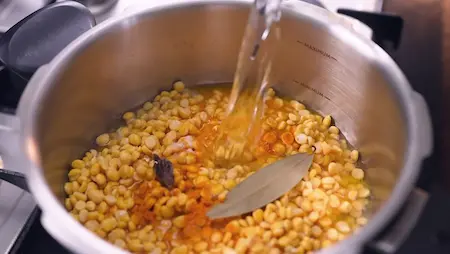
Soak chana dal well, then pressure cook it with turmeric powder, black cardamom, bayleaf, salt, and water. We are not cooking this dal in the normal way — all the whole spices go in together so the dal absorbs those deep flavours right from the start. Cook for about two whistles until the dal is soft yet still holds its shape. If the dal was not soaked, give it three to four whistles. Keep the dal along with its stock — that stock forms the curry base for the Chana Soya Ki Sabji, so do not discard it.
Step 2: Boil and Prepare Soya Chunks
While the dal is cooking, get the soya chunks ready. Add the soya chunks to a pot of hot water and boil them for one to two minutes until soft and spongy. Once done, drain them and squeeze out all the excess water completely. This step is very important — soya has a light, raw smell, and we do not want that smell in our Chana Soya Ki Sabji. Squeezing them out thoroughly removes that smell. Keep the squeezed soya chunks aside, ready for sautéing.

Step 3: Prepare the Spiced Curd Mixture
In a bowl, whisk the curd until completely smooth with no lumps. Now add chana masala, turmeric powder, red chilli powder, jeera powder, coriander powder, and salt. Mix everything together well until you have a smooth, lump-free, flavourful curd base. We are not cooking the dahi separately — this mixture will go directly into the tadka, so it needs to be well combined before it hits the pan. Keep this ready.

Step 4: Sauté Potato and Soya Chunks
Heat mustard oil in a pan until it is slightly smoky. Add the diced, peeled potatoes and cook them on high flame for three to four minutes until lightly golden. Once the potatoes have a bit of colour, add the boiled and squeezed soya chunks. Sauté both together on high flame for another one to two minutes — this seals the outer texture of the soya and gives it a slight crunch. Now add salt, red chilli powder, and turmeric powder. Add a splash of water so the spices coat everything evenly without burning the lal mirch. Cover with a lid and cook for two to three minutes so the aloo is fully cooked and all the flavours come together.

Step 5: Cook the Main Masala Base
Heat mustard oil in a separate pan. Add chopped onion and cook until soft and lightly golden. Once the onion has colour, add the ginger-garlic-green chilli paste and sauté for one to two minutes until aromatic and cooked through. Now, this is an important step — lower the flame before adding the curd mixture, or turn the gas off completely. Add the prepared spiced curd mixture and stir continuously. Do not stop stirring — constant movement prevents the dahi from splitting. Keep the flame low and cook until the curd mixture releases oil on the sides. That is your signal to move forward.

Step 6: Build the Curry
Once the curd mixture has released oil, add the boiled chana dal along with all of its stock. Mix well and let everything simmer together for a few minutes so the flavours start combining and the gravy thickens slightly. Now add the sautéed potatoes and soya chunks. Mix gently so the aloo and soya do not break, and cook further for four to five minutes so that all the flavours — the dal, the masala, the potatoes, the soya — come together into one rich, cohesive Chana Soya Ki Sabji.
Step 7: Final Flavouring
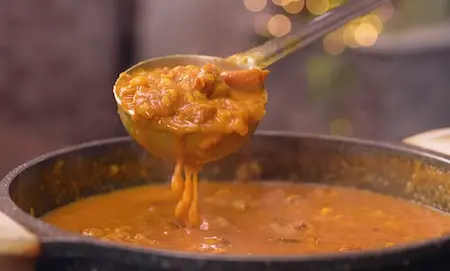
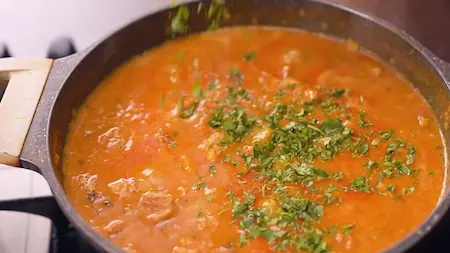
Once the curry is simmering beautifully, add kasuri methi and chopped fresh coriander. Stir them in and let the Chana Soya Ki Sabji simmer for a few more minutes. The kasuri methi adds a warm, slightly bitter depth, and the coriander brings freshness. At this point, check the consistency — the dal should be thick enough to coat a spoon but not too dry. Adjust water if needed and check salt.
Step 8: Prepare the Tadka
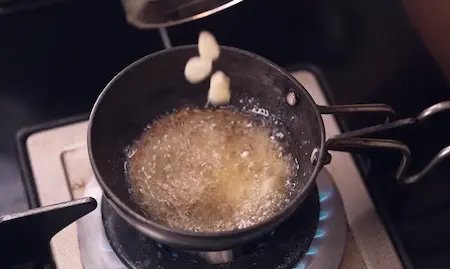
This is the final touch that takes the Chana Soya Ki Sabji to another level. Heat ghee in a small pan. Once the ghee is hot, add jeera and let it splutter. Add hing and chopped garlic, and cook until the garlic turns golden brown. The moment the garlic is ready, add red chilli powder — it will sizzle in the ghee immediately. Pour this hot, aromatic tadka straight over the Chana Soya Ki Sabji at once. You will hear that satisfying sizzle and see the whole dish light up with colour.
Step 9: Serve Hot
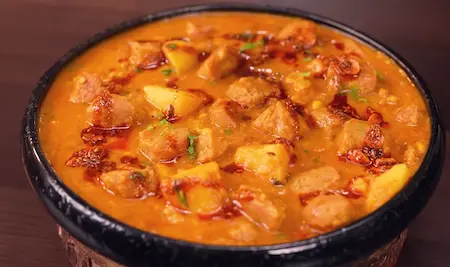
Mix the tadka gently into the Chana Soya Ki Sabji and it is absolutely ready. Serve it hot with roti, paratha, or steamed rice. This is a wholesome, protein-packed dish with bold Indian flavours — you have chana dal, soya chunks, and aloo all in one bowl, meaning protein, carbs, and taste together. If you do not make it, how will you know what it tastes like? Go make it, and share it with your family and friends too.
About the Recipe
This Chana Soya Ki Sabji is built on four simple processes that come together beautifully. First, the chana dal is boiled in a pressure cooker with haldi, namak, black cardamom, and tejpatta — these whole spices give the dal a deep, grounded flavour right from the start. If you have soaked the dal, two whistles are enough; if not, give it three to four.
The second step is preparing the soya chunks. I always boil them in hot water for one to two minutes, then squeeze them out completely. The reason? Soya has a light smell that I simply do not want in this dish. Squeezing them dry removes that smell and also gives them a better texture when they hit the pan later.
The third step is what makes this Chana Soya Ki Sabji really special — a yogurt and masala mixture that goes directly into the tadka. I mix dahi with chana masala, haldi, lal mirch, jeera powder, and dhaniya, and stir it all together before it goes into the pan. The key here is to never add dahi on high flame, or it will curdle. Always lower the flame or even turn off the gas before adding the dahi mixture, and keep stirring continuously.
The fourth and final touch is the double tadka. One tadka is at the base — mustard oil, diced potatoes, and soya chunks cooked together until golden. The second tadka comes at the very end — ghee, jeera, heeng, chopped garlic, and lal mirch powder poured sizzling hot over the finished dish. It is this second tadka that gives Chana Soya Ki Sabji its rich, aromatic finish. Finally, a handful of kasuri methi and fresh coriander, and the dish is absolutely done.
Cooking Tips for the Perfect Chana Soya Ki Sabji
Always soak your chana dal: Soaked chana dal cooks in just two pressure cooker whistles. If you skip soaking, it will take three to four whistles, and the texture may not be as even. For the best Chana Soya Ki Sabji, plan ahead and soak the dal for a few hours.
Boil and squeeze the soya chunks properly: Do not skip the squeezing step. After boiling the soya chunks for one to two minutes, strain them and squeeze out all the water firmly. This removes the mild smell of soya that can otherwise overpower the dish.
Seal the soya on high flame: After adding the soya to the mustard oil with the potatoes, cook everything on high flame for three to four minutes. This seals the outer texture of the soya, giving it a slight crunch. When it later simmers with the dal, it becomes wonderfully spongy — that is the best part of this Chana Soya Ki Sabji.
Add a splash of water when cooking on high flame: When the dry spices are added to the potato and soya mixture, always add a little water and cover the pan. Without water, the lal mirch powder will burn and turn bitter.
Never add dahi on high flame: This is non-negotiable. Always lower the flame or turn the gas off before adding the dahi-masala mixture. Keep stirring continuously to prevent curdling. Wait for the dahi to release oil before adding the dal — that is your signal to move forward.
Use mustard oil: Mustard oil is the soul of this dish. It gives Chana Soya Ki Sabji that authentic desi flavour that refined oil simply cannot replicate.
Do not skip the final ghee tadka: The double tadka is what separates a good Chana Soya Ki Sabji from a great one. The finishing tadka of ghee, jeera, heeng, garlic, and lal mirch transforms the dish completely.
Pairing Guide for Chana Soya Ki Sabji
This Chana Soya Ki Sabji is a complete meal in itself — it has protein from the chana dal and soya chunks, carbs from the potatoes, and bold flavour from the double tadka. But pairing it right makes the whole experience even better.
With roti or chapati: Hot phulkas or plain parathas are the most natural pairing for this curry. The slightly thick consistency of Chana Soya Ki Sabji coats the roti perfectly with every bite.
With rice: Plain steamed basmati rice works beautifully. The spiced, tangy dal soaks into the rice and makes for a deeply satisfying meal.
With jeera rice: If you want to elevate the meal slightly, serve Chana Soya Ki Sabji alongside jeera rice. The cumin in the rice complements the jeera in the dal tadka wonderfully.
With a side of raw onion and green chilli: In the desi tradition, a few slices of raw onion with a green chilli on the side cuts through the richness of the curry and adds a sharp freshness.
With lassi or chaas: A glass of chilled masala chaas or sweet lassi is the ideal drink to balance the bold spices in this Chana Soya Ki Sabji, especially if you enjoy your food on the spicier side.
With a dollop of white butter: If you are serving this with roti, a small spoon of white butter (makhan) on top of the hot bread pairs with the rich ghee tadka of the sabji in the most delicious way.
Frequently Asked Questions About Chana Soya Ki Sabji
What is Chana Soya Ki Sabji?
Chana Soya Ki Sabji is a desi protein curry made with boiled chana dal (split Bengal gram) and soya chunks, cooked together in a spiced mustard oil and yogurt-based gravy, finished with a double ghee tadka. It is a unique and masaledar combination that is both nutritious and deeply flavourful.
Why should I squeeze the soya chunks before using them in Chana Soya Ki Sabji?
Soya chunks have a light, slightly raw smell that can overpower the dish. After boiling them for one to two minutes, squeezing them out completely removes that smell. This step also improves the texture of the soya in the final Chana Soya Ki Sabji, making them spongy and flavour-absorbent.
Do I need to soak the chana dal before making Chana Soya Ki Sabji?
Soaking is highly recommended. Soaked chana dal cooks in just two pressure cooker whistles, giving you a soft, well-cooked texture. If you have not soaked it, you will need three to four whistles. Either way, the chana dal should be completely soft before it is added to the Chana Soya Ki Sabji gravy.
Why does Chana Soya Ki Sabji use a double tadka?
The double tadka is one of the defining features of this Chana Soya Ki Sabji. The first tadka forms the base — mustard oil with potatoes and soya. The second tadka at the end uses ghee, jeera, heeng, garlic, and lal mirch, which adds a rich, aromatic finishing layer to the dish. This two-step tadka makes the flavour far more layered than a regular dal.
Why is dahi added to the tadka in this Chana Soya Ki Sabji recipe?
Instead of cooking the dahi separately, I mix it directly with all the masalas — chana masala, haldi, lal mirch, jeera powder, and dhaniya — and add the whole mixture to the tadka at once. This method infuses all the spices into the yogurt before it hits the pan, giving the Chana Soya Ki Sabji a tangy, deeply spiced base.
How do I prevent the dahi from curdling in Chana Soya Ki Sabji?
Always lower the flame before adding the dahi mixture — or even turn off the gas completely for a few seconds. Never add dahi on high flame as it will split immediately. Stir continuously as you add it and keep the flame low until the dahi is fully incorporated and begins to release oil.
Can I make Chana Soya Ki Sabji without potatoes?
Yes, you can skip the potatoes if you prefer. However, the aloo adds a soft, comforting texture and mild sweetness that balances the spices in Chana Soya Ki Sabji really well. I recommend keeping them in — the trio of chana dal, soya, and aloo is what makes this dish special and gives you protein, carbs, and flavour all in one bowl.
Is Chana Soya Ki Sabji a healthy recipe?
Absolutely. Chana Soya Ki Sabji is packed with protein from both the chana dal and the soya chunks, making it an excellent choice for anyone looking to increase their protein intake through a vegetarian meal. It also provides complex carbohydrates from the potatoes and essential nutrients from the whole spices and yogurt used in the recipe.
What is the best oil to use for Chana Soya Ki Sabji?
Mustard oil is the best choice for this recipe and is what I use for both the base tadka (for the potatoes and soya) and the gravy. Mustard oil gives Chana Soya Ki Sabji that authentic desi flavour. The final finishing tadka uses ghee, which adds a layer of richness that ties the whole dish together.
What can I serve with Chana Soya Ki Sabji?
Chana Soya Ki Sabji goes beautifully with hot roti, plain parathas, steamed basmati rice, or jeera rice. For a complete desi meal, serve it alongside raw onion slices, a green chilli, and a glass of chilled masala chaas or sweet lassi. A small dollop of white butter on your roti alongside this curry is truly something else.